When you hire someone to manage your books, you’re trusting them with an important part of your business. But what’s the difference between a bookkeeper and a Certified Bookkeeper—and why does that designation matter?
Both may provide valuable bookkeeping services. The distinction is that certification shows a professional has met the requirements of a specific credentialing organization.
What does a bookkeeper do?
A bookkeeper helps maintain your business’s financial records. Depending on your agreement, that work may include:
- Recording and categorizing income and expenses.
- Reconciling bank and credit card accounts.
- Tracking customer invoices and vendor bills.
- Supporting payroll processing.
- Preparing financial reports.
Bookkeepers develop their skills through different combinations of education, training, and hands-on experience. The job title alone doesn’t tell you which qualifications someone holds.
An experienced bookkeeper without certification can still provide excellent service. You’ll want to consider their knowledge, accuracy, communication, and familiarity with businesses like yours.
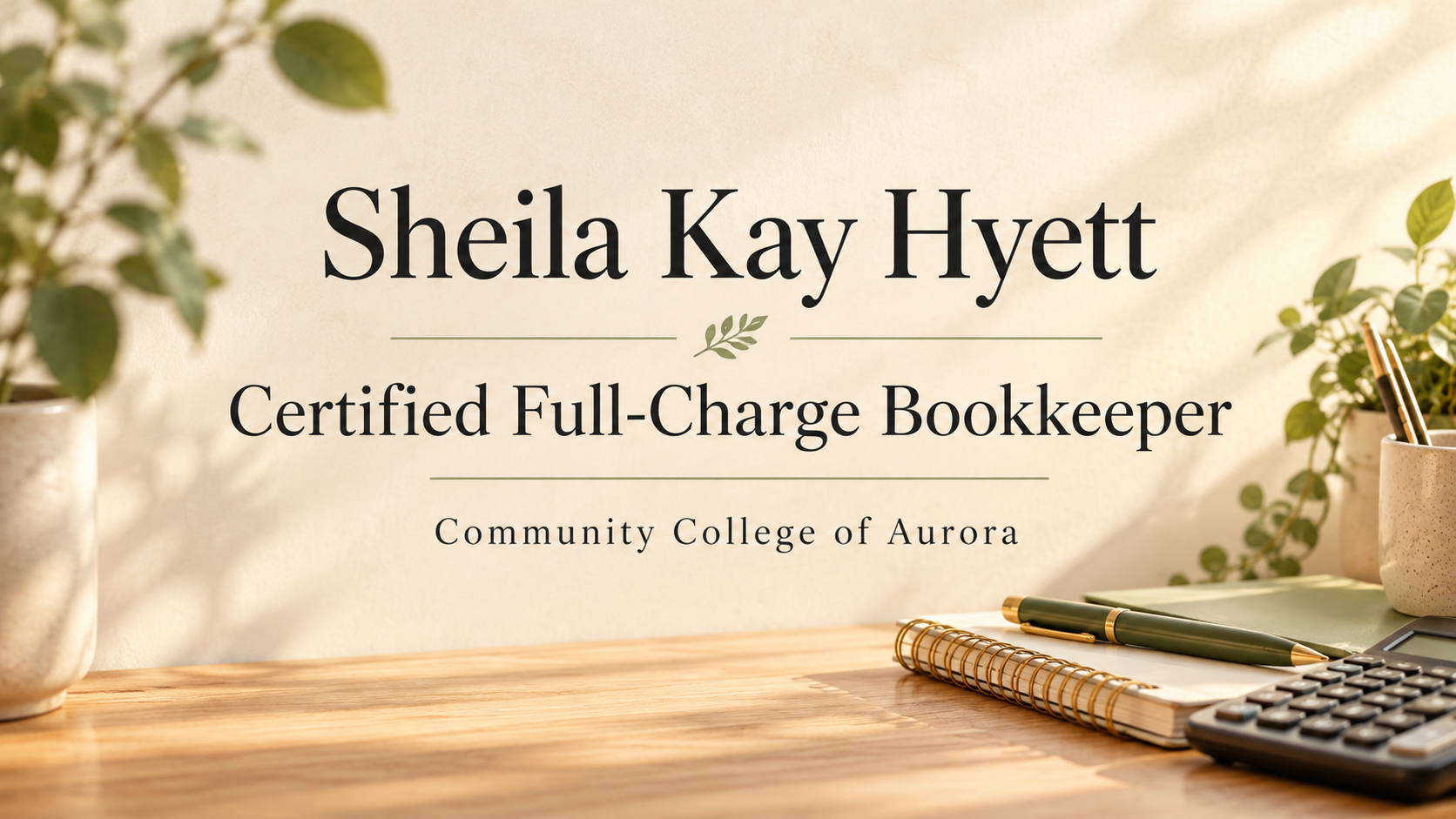
What does “Certified Bookkeeper” mean?
A certification identifies a particular credential earned through an organization—not simply a description someone chooses for their business.
For example, the American Institute of Professional Bookkeepers (AIPB) awards the Certified Bookkeeper (CB) designation. Its requirements include passing a national examination, documenting qualifying bookkeeping experience, and signing a code of ethics. The experience requirement is at least two years of full-time work or 3,000 hours of part-time or freelance work. Source: AIPB
AIPB’s program covers subjects such as adjusting entries, error correction, payroll, depreciation, inventory, and internal controls. These are skills that support accurate, dependable financial records. Source: AIPB certification program
Not all bookkeeping credentials are the same
You may also see the Certified Public Bookkeeper (CPB) credential offered by the National Association of Certified Public Bookkeepers. That is a separate credential with its own requirements. When comparing professionals, ask which organization issued their designation and what it required. Source: NACPB
A course-completion certificate or accounting-software credential may demonstrate useful training, but it shouldn’t automatically be treated as equivalent to a professional bookkeeping designation.
Why does certification matter to a business owner?
Certification gives you an additional way to evaluate a bookkeeper’s qualifications. It provides evidence that the person has met defined standards rather than asking you to rely on a job title alone.
That can offer reassurance when you need someone to investigate an account that doesn’t reconcile, recognize an incorrectly recorded expense, or help keep your records ready for your accountant.
However, certification is one part of the picture. It doesn’t guarantee error-free work or replace relevant experience, careful review, and clear communication.
What should you ask before hiring?
Whether you’re considering a Certified Bookkeeper or a bookkeeper without that designation, ask:
- What experience do you have with businesses like mine?
- Which credentials do you hold, and who issued them?
- How do you check your work and resolve discrepancies?
- What services are included, and when will my books be updated?
- How will you protect my financial information?
- How do you coordinate with my accountant or tax preparer?
The answers can help you understand both the person’s qualifications and what working together will look like.
Choose someone who brings clarity to your books
Your bookkeeping should help you understand where your money is going and how your business is performing.
A Certified Bookkeeper designation provides meaningful evidence of professional qualifications. Pair that credential with relevant experience, reliable processes, and responsive service, and you have a stronger basis for choosing someone you can trust.
Ready for more organized books and a clearer picture of your business finances? Let’s talk about your bookkeeping needs.